The Old Catholic Diocese of
Mary-by-the-Haven
We are an Old Catholic Diocese located in Northeastern Pennsylvania. We are a welcoming and inclusive faith community in the European Old Catholic Tradition, not affiliated with any Roman Catholic Diocese.
Who We Are
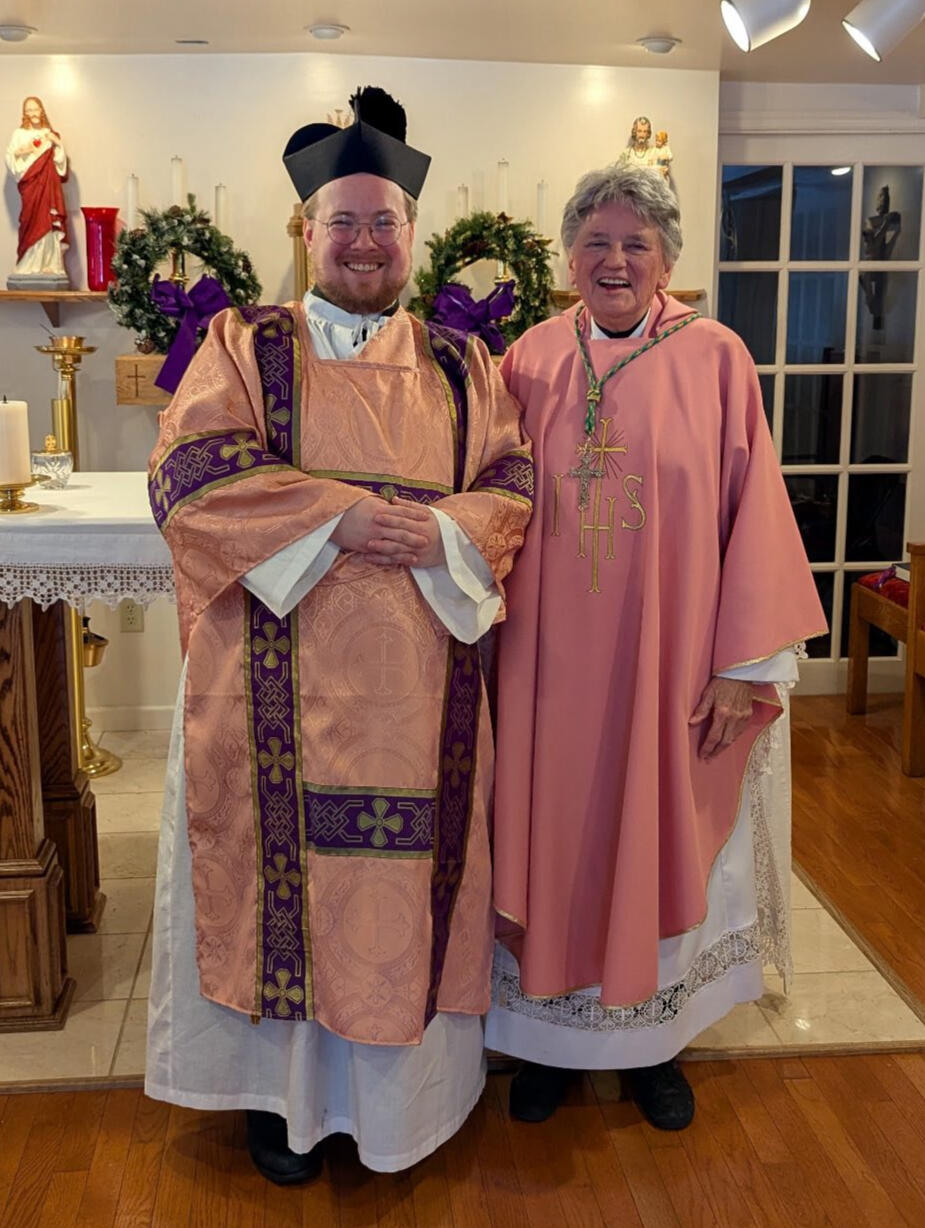
We are a welcoming and inclusive faith community in the Dutch Old Catholic Tradition. Our Bishop's chapel is located in the countryside outside of Schuylkill Haven, Pennsylvania and we are currently looking forward to the establishment of new mission parishes to provide services to Pennsylvania's many counties.We believe in Christ's institution of all seven sacraments and in the Real Presence of Christ - Body, Blood, Soul, and Divinity in the Eucharist.
The century's old European denomination known as 'Old Catholic' had its beginnings in the Ancient Catholic Church of the Netherlands. Old-Catholic Bishops hold Apostolic Succession through a number of validated lineages.For more on Old Catholicism, please see the 'What is Old Catholicism' section of the main page!Originally founded as a parish church (Mary Mother of Jesus Chapel) by Bishop Bernadette Meck, we have operated in and around eastern Pennsylvania for over 25 years. The first stirring of Diocesan establishment to provide a more structured network of support, coverage, and ministry to Old Catholics and for Old Catholic Clergy began in 2025 with the acceptance of new clergy under Bishop Meck's supervision.Many of our clergy work in addition to their ministry, primarily in the fields of education, healthcare, and support. As our faith community continues to grow we look forward to the establishment of new parishes and the ability of our clergy to minister full-time to all faithful in Pennsylvania.
Services & Sacraments
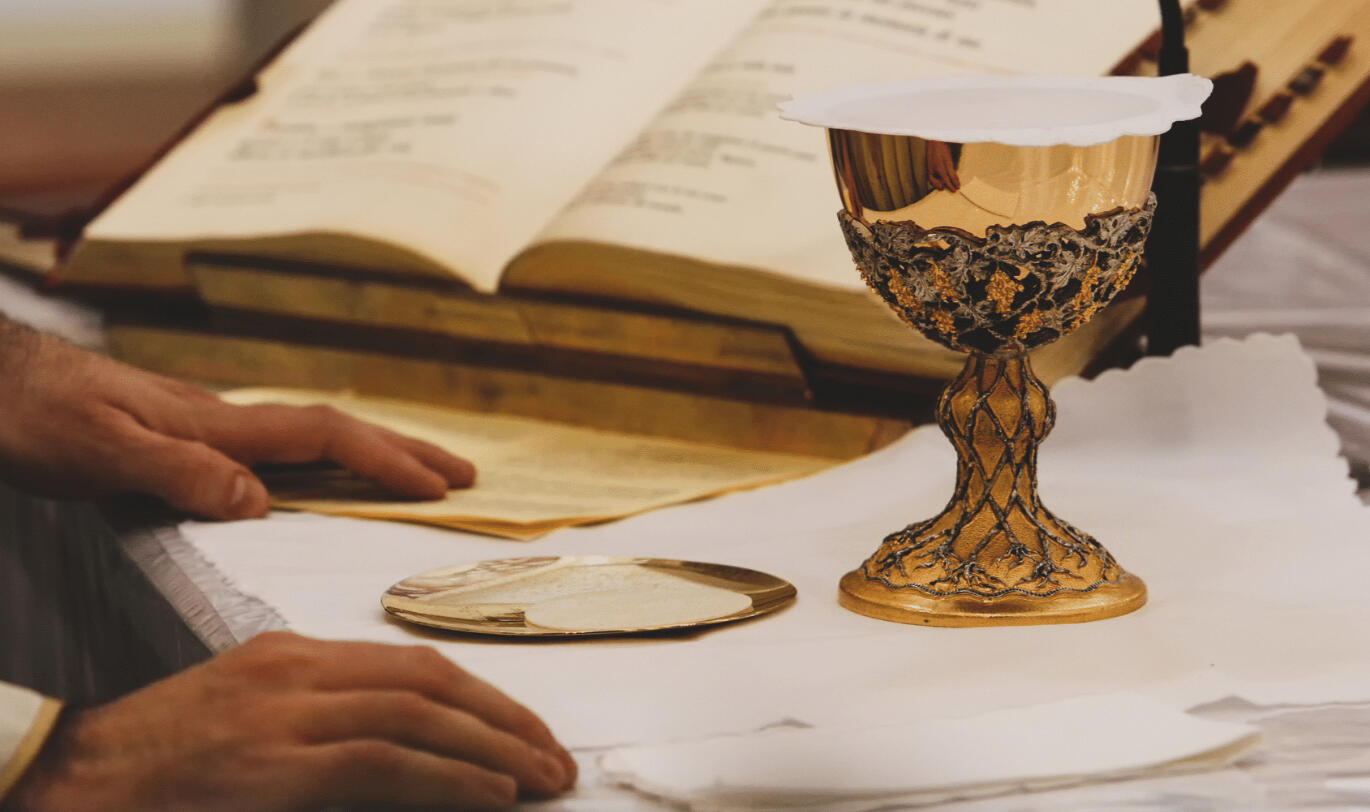
The clergy of the Diocese of Mary-by-the-Haven offer the following Sacraments to Old-Catholic Faithful. The Sacrament of Holy Communion is semi-opened, and anyone who truly believes in the Real Presence and confirms this may receive upon request.
Holy Eucharist
Holy Eucharist may be administered to any who believe in the Real Presence at Masses of the Diocese and at certain other services as approved by clergy.
Having celebrated the feast of the paschal lamb with his disciples, that the figure might give way to the reality, the shadow to the substance, " Jesus took bread, and giving thanks to God, blessed and brake, and gave to his disciples, and said, take ye and eat: This is my body, which shall be delivered for you: this do for the commemoration of me: and taking the chalice also after he had supped, he said, this chalice is the New Testament in my blood: this do, as often as you shall drink it in commemoration of me." - Catechism of Trent, pg. 146.
Baptism
Priests and deacons of the Diocese may offer Baptism of Adults and Infants upon request.
Baptism may be accurately and appropriately deemed: "The Sacrament of regeneration by water in the word." By nature, we are born from Adam, children of wrath; but by baptism we are regenerated in Christ, children of mercy; for, " He gave power to men to be made the sons of God, to them that believe in his name, who are born not of blood, nor of the will of flesh, nor of the will of man, but of God. - Catechism of Trent, pg. 114.
Confirmation
Confirmation is administered by the Bishop, or a priest specifically appointed by the Bishop to carry out the Sacrament.
Confirmation, although said by Melchiades to have a most intimate connexion with baptism, [10] is yet an entirely different Sacrament...by the grace of baptism we are begotten to newness of life...by that of confirmation grow to full maturity, " Hence, Pope Melchiades marks the difference between them with minute accuracy in these terms: " In baptism," says he, " the Christian is enlisted into the service, in confirmation he is equipped for battle; at the baptismal font the Holy Ghost imparts the plenitude of innocence, in confirmation the perfection of grace... - Catechism of Trent, pg. 138-9.
Penance
Penance is offered before most Sunday Masses and by appointment by the priests of the Diocese.
" I will give to thee the keys of the kingdom of heaven, whatever sins you loose on earth, shall be loosed, also, in heaven." [21] ... The words that compose the form are: " I ABSOLVE THEE," as may be inferred not only from these words of the Redeemer: " Whatsoever you shall bind upon earth, shall be bound also in heaven;" [25] but also from the same doctrine of Jesus Christ, as recorded by the Apostles. - Catechism of Trent, pg. 180-1.
Holy Matrimony
Marriage may be performed by priests and deacons of the Diocese. This includes same-sex marriages.
The first reason of its institution is because nature instinctively tends to such a union; and under the vicissitudes of life and the infirmities of old age, this union is a source of mutual assistance and support. Another is the desire of family, not so much, however, with a view to leave after us heirs to inherit our property and fortune, as to bring up children in the true faith and in the service of God. - Catechism of Trent, pg. 180-1.
Extreme Unction
Extreme Unction may be administered by priests of the Diocese upon request or need.
Extreme Unction was instituted as a remedy not only for the diseases of the soul, but also for those of the body: this can apply to the sick only, and therefore, this Sacrament is to be administered to those only, whose malady is such as to excite apprehensions of approaching dissolution. - Catechism of Trent, pg. 208.
Holy Orders
Please contact the Diocesan Ordinary or Director of Vocations for Vocation Inquiries.
Priests and bishops are, as it were, the interpreters and heralds of God, commissioned in his name to teach mankind the law of God, and the precepts of a Christian life they are the representatives of God upon earth...The power of consecrating and offering the body and blood of our Lord and of remitting sin, with which the priesthood of the New Law is invested, is such as cannot be comprehended by the human mind, still less is it equalled by, or assimilated to, any thing on earth. - Catechism of Trent, pg. 180-1.
Locations
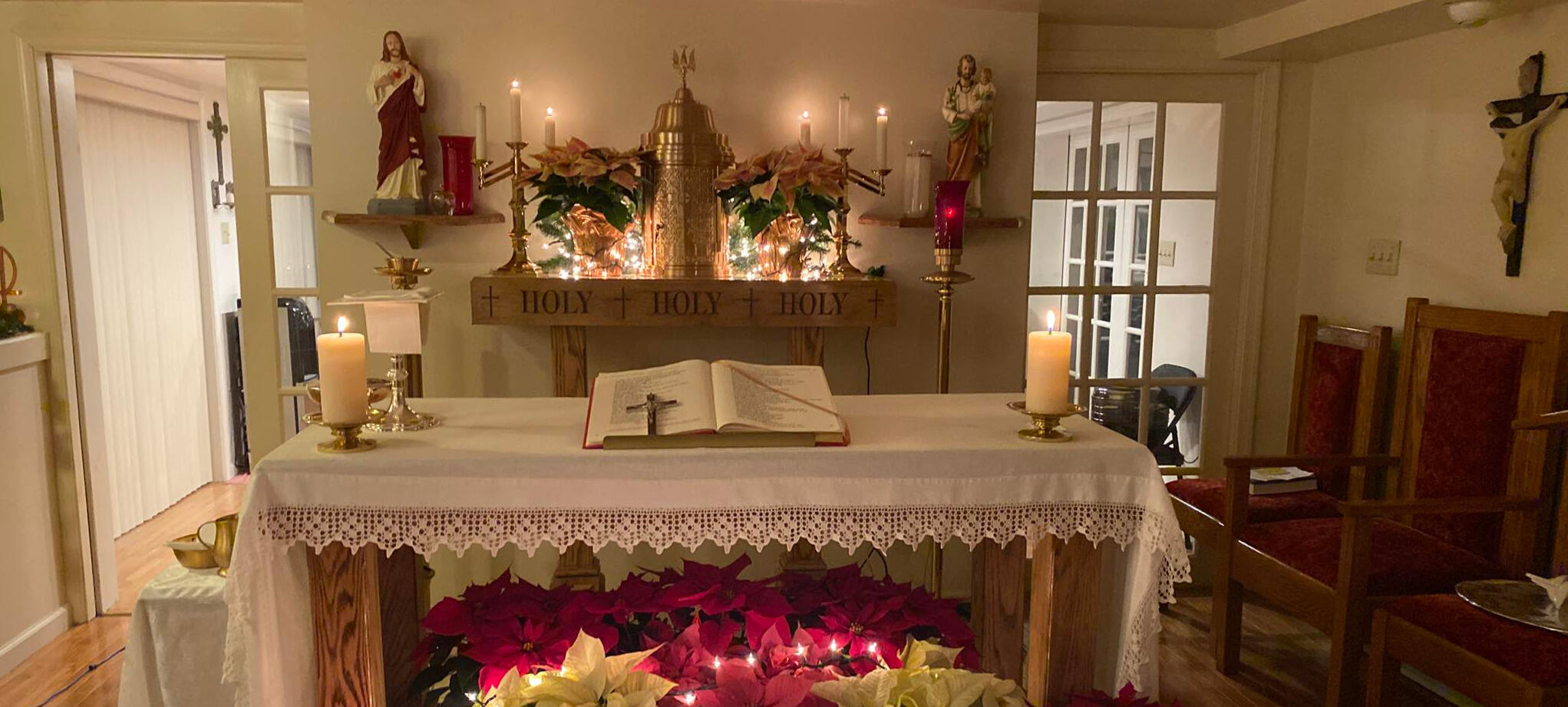
Mary, Mother of Jesus Episcopal Chapel
Address: 314 Deer Trail Drive, Schuylkill Haven, PA. 17972
Phone: 570-900-4921 (Call & Text)
Email: [email protected]
Service Times: Sunday Mass, 12 P.M.
Zoom Available?: Yes. Contact Parish Staff.
Website: marymotherofjesusiocc.org
Mary, Haven of Grace Parish
Address: 210 Garibaldi Ave. Roseto, PA. 18013
Phone:
Email: [email protected]
Service Times: See Parish Website.
Zoom Available?: No.
Website: maryhavenofgrace.org
Clergy of the Diocese
Clergy of the Diocese
Most Rev. Bernadette Meck
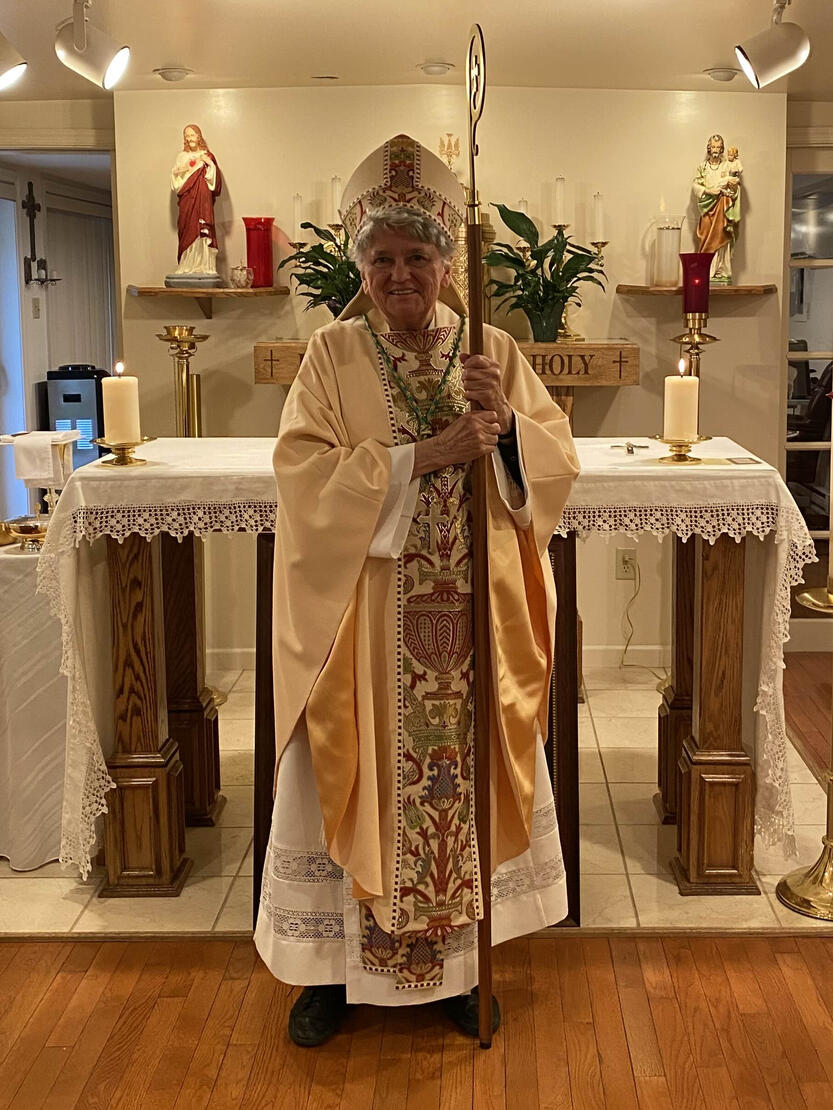
Position: Diocesan Bishop. Vocations Director.
Alma Mater: Penn State, Kutztown, and Temple Universities, Agape Seminary.
Ministry Dates: 2001-Present
Assignment: Bishop / Pastor - Mary, Mother of Jesus.
Contact:
Rev. Kevin Gembarski
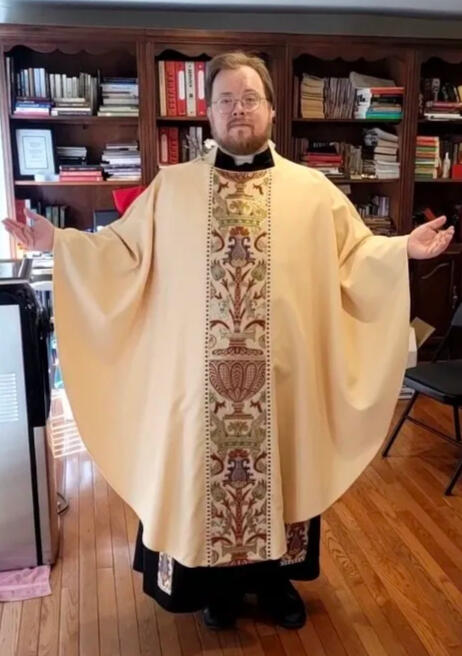
Position: Pastor. / Dir. Policy & Comm. / Technology Director.
Alma Mater: Katholieke Universitiet Leuven/St. Charles Borromeo Seminary.
Ministry Dates: 2025-Present
Assignment: Pastor - Mary, Haven of Grace. Nursing Homes/Prison Ministry.
Contact: [email protected]
Rt. Rev. Arthur Conquest III
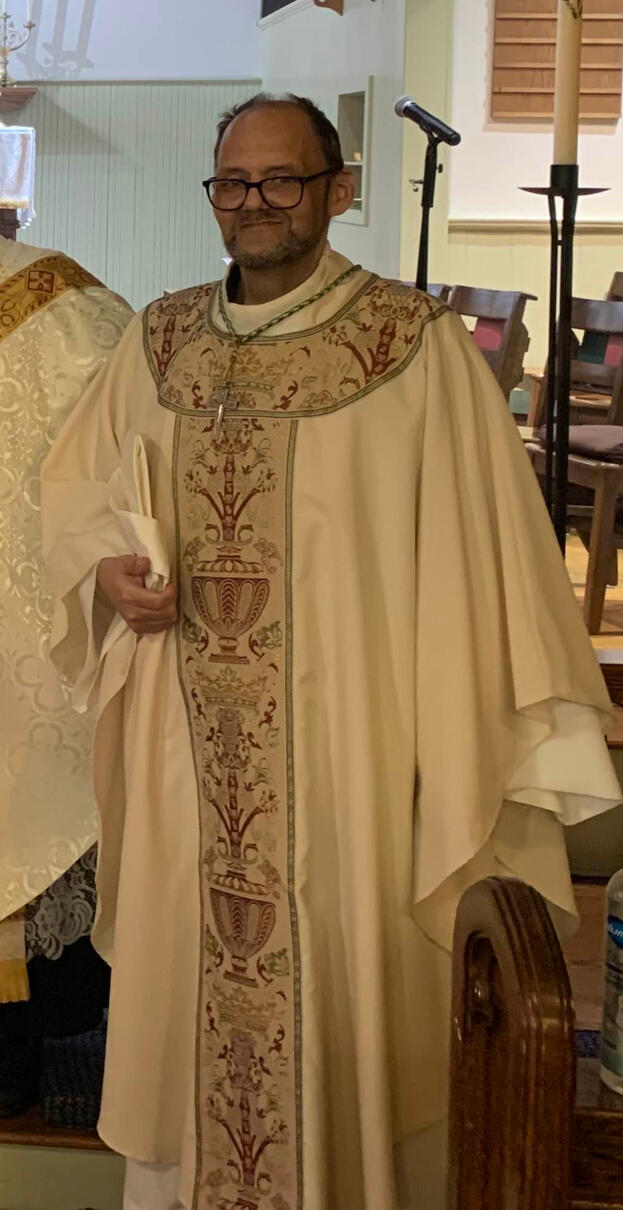
Position: Auxiliary Bishop.
Alma Mater: East Stroudsburg University, Agape Seminary.
Ministry Dates: 2002-Present.
Assignment: Priest-in-Residence - Mary, Haven of Grace.
Contact:
Rev. Mr. Thaddeus Hager
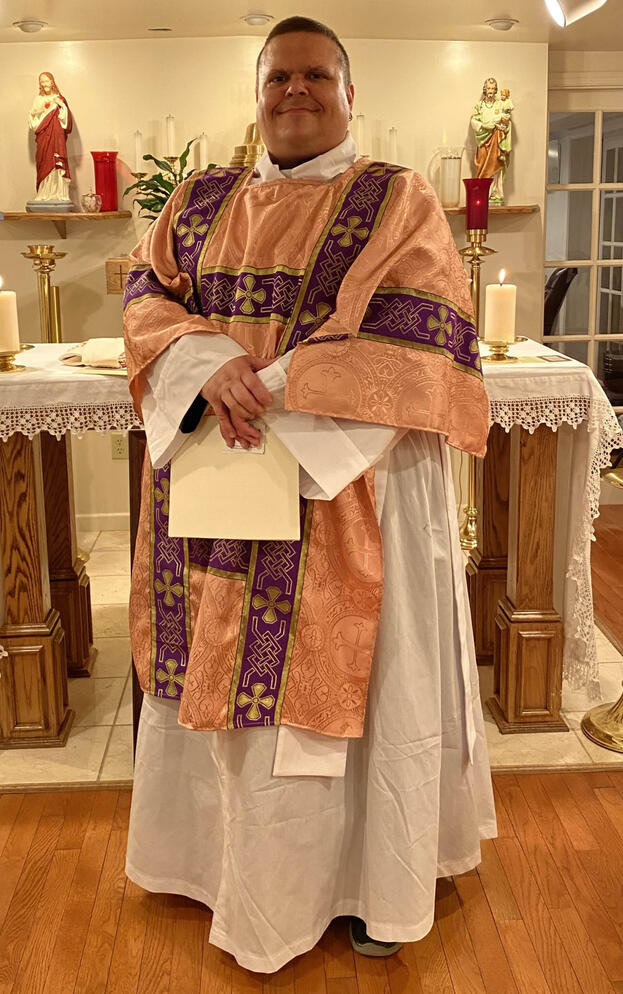
Position: Transitional Deacon
Alma Mater:
Ministry Dates: 2026-
Assignment: Transitional Deacon - Mary, Mother of Jesus.
Contact: [email protected]
Forms & Policies
Rules & Regulations
Text
Episcopal Lineage of the Diocese
The Diocese preserves and documents more than one episcopal lineage. Its primary lineage is received through Bishop Bernadette M. Meck, and a secondary through Bishop Arthur Conquest III.
Primary Lineage (M+F)
Bernadette M. Meck.1. Bishop Joseph A. Grenier
Antonio Barberini → Michael Le Tellier → Jacques-Bénigne Bossuet → James Coyon de Matignon → Dominique-Marie Varlet → Cornelius Van Steenhoven → Cornelius Johannes Barchman Wuytiers → Theodorus van der Croon → Petrus Johannes Meindaerts → Walter van Nieuwenhuisen → Johannes Jacobus van Rhijn → Willibrord van Os → Johannes van Santen → Henricus Loos → Johannes Heijkamp → Gerardus Gul → Arnold Harris Mathew, consecrated → Frederick Willoughby → James I. Wedgwood → Irving S. Cooper → Charles Hampton → Herman A. Spruit → Robert E. Burns → Ivan B. MacKillop → Joseph A. Grenier → Bernadette M. Meck.Pope Clement XIII → Bernardin Giraud → Alexander Matthaeus → Petrus Franciscus Galletti → Iacobus Philippus Fransoni → Carolus Sacconi → Edward Howard → Mariano Rampolla del Tindaro → Joaquim Arcoverde de Albuquerque Cavalcanti → Sebastião Leme da Silveira Cintra → Carlos Duarte Costa → Luis Fernando Castillo Méndez → Justo González → Donald J. Buttenbusch → Raymond F. Kelly → Joseph A. Grenier → Bernadette M. Meck.Gerardus Gul → Arnold Harris Mathew → Rudolph de Landas Berghes → Carmel Henry Carfora → Hubert Augustus Rodgers → James Edward Burns → Armand C. Whitehead → Joseph A. Grenier → Bernadette M. Meck.2. Archbishop Peter Paul Patrick Brennan
Gerardus Gul → Arnold Harris Mathew → Rudolf de Landas Berghes → Carmel Henry Carfora → Richard Arthur Marchenna → Peter Paul Patrick Brennan → Bernadette M. Meck.
Secondary Lineage (M)
Arthur Conquest III.1. Archbishop Peter Paul Patrick Brennan
Scipione Cardinal Rebiba → Giulio Antonio Santorio → Girolamo Bernerio, O.P. → Galeazzo Sanvitale → Ludovico Ludovisi → Luigi Caetani → Ulderico Carpegna → Paluzzo Paluzzi Altieri degli Albertoni → Pope Benedict XIII → Pope Benedict XIV → Pope Clement XIII → Marcantonio Colonna → Hyacinthe-Sigismond Gerdil → Giulio Maria della Somaglia → Carlo Odescalchi → Costantino Patrizi Naro → Lucido Maria Parocchi → Pope St. Pius X → Pope Benedict XV → Pope Pius XII → Eugène Cardinal Tisserant → Pope St. Paul VI → Emmanuel Milingo → Peter Paul Patrick Brennan → Michael O'Donnell → Arthur Conquest III.
What is 'Old Catholicism?'
The Diocese of Mary-by-the-Haven is a community in the Dutch Old Catholic Tradition. This means we are not affiliated with the Roman Catholic Church, the Roman Catholic Diocese of Allentown, and are not in full communion with them. The Roman Catholic Church has historically recognized the validity of Old Catholic orders in the Utrecht succession.
What is Old Catholicism?
Old Catholicism is not a new religion, nor a rejection of Catholic faith. At its heart, Old Catholicism is Catholicism as received through the undivided Church, nourished by the Fathers, the medieval Western tradition, the sacramental priesthood, the Holy Eucharist, and the apostolic succession of bishops. It is a Catholicism rooted in continuity, not reinvention - It is an expression of Western Catholic Christianity that seeks to preserve the ancient sacramental, liturgical, and episcopal life of the Church without surrendering it to modern centralization or reduction. Many first encounter Old Catholicism through the controversies surrounding the First Vatican Council. That history matters, but we are part of an older group of Old Catholics which preceded the Vatican Council disputes, one centered in the Cathedral-Church of Utrecht. For us, Old Catholicism is not a reaction against a council, a pope, or a particular Roman decree. It is a way of living the Catholic tradition with depth, freedom, reverence, and spiritual seriousness. It is a way of reviving the diverse beauty of our faith as once expressed in unique ways by communities throughout the world.
Catholic, But Not Roman.
Old Catholics are Catholics who hold principled and well-founded hesitancies against the current policies of the Roman Church. We retain the episcopacy, the sacraments, the Mass, the priesthood, devotion to the Blessed Virgin Mary and the saints, and the spiritual inheritance of the Western Church. We do not understand the Church as a loose association of believers, nor as a purely invisible fellowship. The Church is visible, sacramental, apostolic, and historical. She is not something each generation invents for itself, She is a received tradition.At the same time, we do not believe that Catholicity is exhausted by blind obedience to the Pope. Rome has a real and venerable place in the history of the Church. The See of Peter cannot simply be treated as irrelevant. But the fullness of Catholic life is older and deeper than the administrative habits of any one ecclesiastical court.
The Papacy and the Old Catholic View.
Our position is not anti-papal. In fact, it is precisely because the papacy matters that we take its history and theology seriously. The Bishop of Rome has a true primacy in the Church. The papacy is not merely an honorary office, nor a political accident. It belongs to the providential structure of Western Catholic Christianity and has served, at its best, as a sign of unity, doctrinal guardianship, and appeal beyond local corruption or faction.But primacy is not the same as absolute domination. The papal office exists to serve the Catholic faith, not to replace it. For that reason, our approach is neither Gallican in the shallow political sense, nor Febronian in the sense of reducing the papacy to a mere administrative convenience. We do not wish to make the Pope into a decorative chairman of bishops. Rather, we hold that the papacy must be understood according to the older Catholic balance: real primacy, real episcopal authority, real Tradition, and real limits.We pray for the restoration of the Church’s visible unity. We honor what is holy in the Roman tradition. We recognize the saints, sacraments, and spiritual treasures that remain there. But we also refuse the idea that fidelity to Catholicism requires surrendering conscience, charity, and the older breadth of the Church to every modern Roman disciplinary posture. The Church is not made more Catholic by becoming more fearful, more rigid, or more suspicious of wounded people seeking grace.
Older Than the Controversies.
The Old Catholic spirit reaches deeper than nineteenth-century arguments. It looks back to the older Western Church, especially the Dutch Church of the Classical and Early Medieval Eras, where bishops were not merely branch managers of a central bureaucracy, where local churches and their liturgical, doctrinal, and expressed differences possessed real life and dignity, and where the Catholic faith was carried through liturgy, sacrament, beauty, learning, and pastoral care. This older Catholicism was not perfect. No age of the Church has been perfect. But it possessed a spiritual and philosophical depth often flattened by modern ecclesiastical culture. It knew that the Church is not only a rule-making institution. She is a sacramental world, a school of holiness, a bearer of memory, and a place where heaven touches earth. That is the Old Catholicism we seek to preserve: not nostalgia, not antiquarianism, but continuity. The point is not to imitate the past as a museum piece. The point is to receive what is living from the past and allow it to breathe again.
Tradition With Charity.
We are traditional in worship because worship is not entertainment. The Mass is not a lecture, performance, or community meeting. It is the Holy Sacrifice, the offering of Christ, and the place where the Church is most fully herself. We are progressive in pastoral charity because grace is not the private property of the respectable. The sacraments are not trophies for the flawless. They are medicine for the wounded, strength for the weak, and communion for those whom Christ calls to his table. For us, tradition and charity are not enemies. A Church that preserves beautiful liturgy while crushing the bruised reed has misunderstood tradition. A Church that speaks of welcome while forgetting sacrament, doctrine, and holiness has misunderstood charity. The Catholic way is deeper than either error.
What We Offer.
We offer Catholic worship, Catholic sacraments, Catholic pastoral care, and Catholic spiritual life in the Old Catholic tradition. That means reverent Mass, access to confession and anointing, devotion to the saints, care for the sick and dying, prayer for the departed, and a serious commitment to the apostolic faith. It also means that those who have been wounded, excluded, ignored, or treated as problems to be managed are not treated as intruders here. We do not claim to be perfect. We do not claim to solve every theological wound in the modern Church. But we do claim that Catholic tradition is larger, older, and more merciful than many have been taught to believe. Old Catholicism, at its best, is the attempt to live that truth.